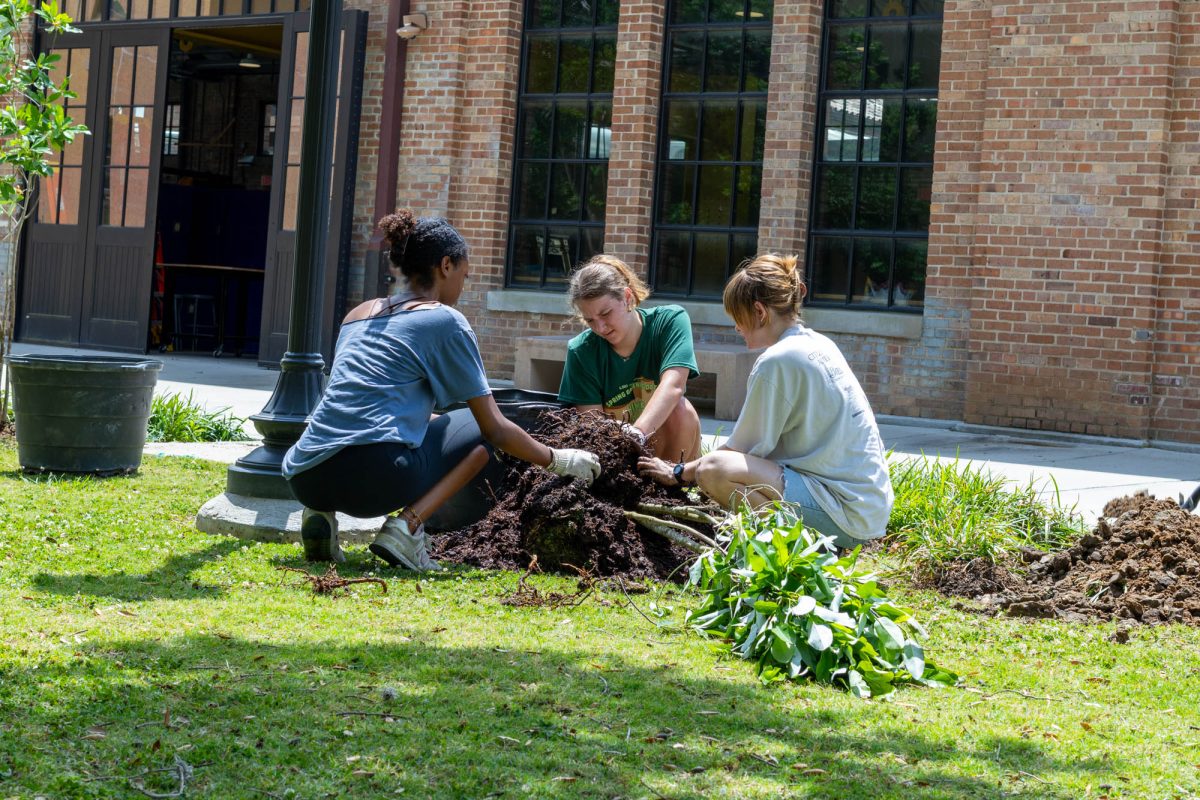
LSU’s Gulf Scholars Program provides opportunities for undergraduate students of any major to participate in projects that support communities and ecosystems along the Gulf Coast.
LSU launched its program in 2023 and is one of 30 universities across the five Gulf Coast states that has a Gulf Scholars Program.
This year’s scholars are the fourth cohort. They applied in the fall and are now choosing their projects. In the spring, scholars will plan their research and then conduct hands-on work and excursions in the summer
Each year, the scholars partner with faculty mentors and pick projects that align with their interests. Many students that complete the program are not science majors but combine their fields with coastal initiatives.
One such student is Roan Guidry, a senior pursuing a dual degree in political science and philosophy. He completed the program in 2024, before his junior year.
Guidry said he mapped out Louisiana’s early conservation efforts for his project. His faculty mentor was Dr. John Andrew Nyman, a renewable natural resources professor.
“Since I’m a humanities major, I didn’t know too much about in-lab research. I’d never done field work, but Dr. Nyman had,” Guidry said.
Guidry and Nyman explored the origins of conservation in Louisiana and the origins of the state’s current efforts.
“What made mine unique to the humanities that I loved was a lot of digging through resources,” Guidry said. “It was a lot of work in the library, a lot of dating back theses, a lot of reading primary source documents.”
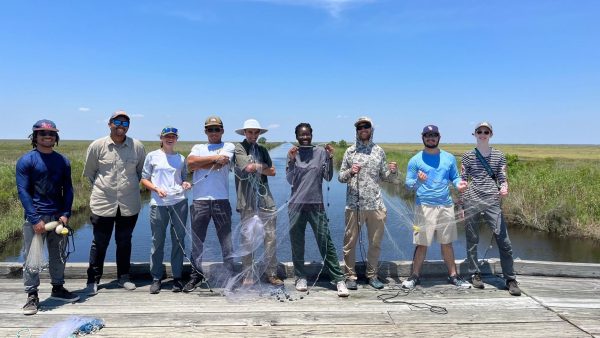
Guidry said his favorite part was going into the field and doing research. Regardless of the scholars’ individual projects, they go on boat excursions in the summer and see the wetlands firsthand.
Guidry also explained how the scholars get paid for their work. Each scholar has access to a $6,000 fund. The National Academies of Sciences, Engineering and Medicine provide the funds for the program.
Over the summer, the students log their hours and can get paid for up to 40 hours of work a week. Guidry added that students can use their fund for any research materials they need.
The program is open to all undergraduate students, but freshmen and sophomores are especially encouraged to apply.
Ella Magerl is the program manager for the Gulf Scholars Program. She said the best candidates for the program are passionate and committed students.
“I truly mean this, that all of the student projects have been really cool and impactful in their own individual ways,” Magerl said.
Although this program is ideal for underclassmen, upperclassmen can still apply. Lily Breaux is a junior art major who enjoys painting and animation. She is a part of this year’s cohort.
She is still working on getting paired with a faculty mentor, but she plans to combine her love for art with how infrastructure in Louisiana affects ecology and culture. She said she hopes to make a short film.
Completing the program as underclassmen allows students to carry on their research for the rest of their college journey or opens doors for other opportunities.
Guidry explained that he continued his work with Dr. Nyman after he completed the program and turned his project into an honors thesis. He is also pursuing the graduation distinction for the Gulf Scholars Program.
“The graduation distinction is built for people who really want to utilize and maximize their time in the program,” Guidry said.
Jace Jordan is another member of this year’s cohort. They are a freshman double majoring in anthropology and English and are interested in folklore. Jordan said that their entire family line traces back to Louisiana and the Gulf South.
“It’s very important to me to be able to study the Gulf South in both a folkloric and environmental context,” Jordan said.
Jordan explained that scholars can either propose their own project or choose one from the list of ideas that the faculty mentors proposed.
Thankfully, Jordan said, there was a folkloric project on the list. They mentioned that the Gulf Scholars Program emphasizes teamwork.
“I’m really excited to build connections with more passionate people,” Jordan said.
Breaux and Jordan’s plans are examples of unique, creative projects that still apply to the Gulf Coast.
“This is such an interesting, one-of-a-kind, once-in-a-lifetime opportunity to be able to spend this much time on something you care so much about, and it’s worth all the trouble,” Breaux said.
A previous version of this story used the wrong pronouns for Jace Jordan.